There is no single way to show that a product really belongs to you. Marking works where the packaging cannot be changed, labels and records work in a chain that passes through many hands, and monitoring works in digital channels. Which one you choose depends on where the problem appears.
Marking: you put a signature on the product
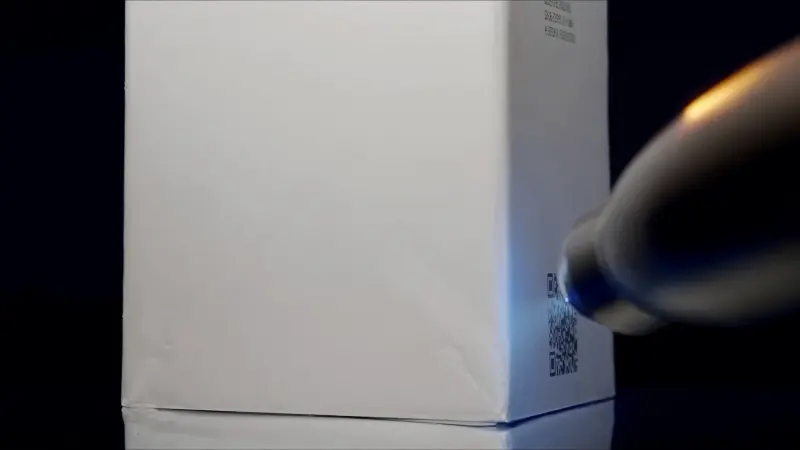
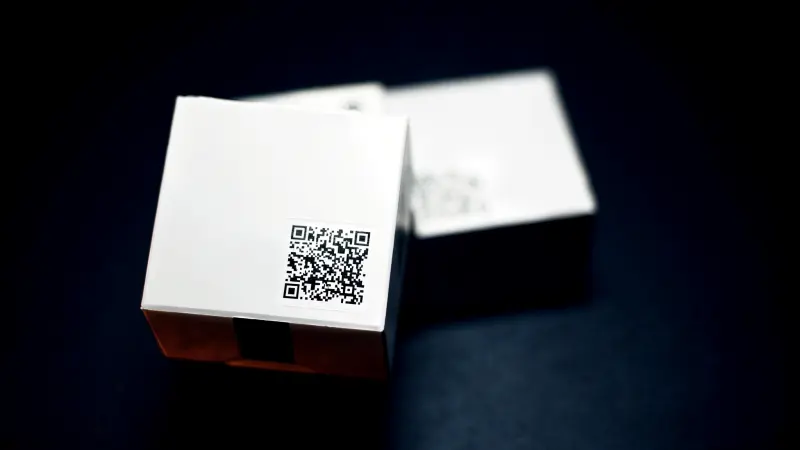
An invisible signature is placed into the existing packaging design — one that can be read later and whose copy cannot pass verification. The look of the packaging does not change, printing happens on your existing line, and your production speed does not drop. Your employee, your dealer or your customer verifies the product while holding it, using the app on their smartphone. This is the most direct answer where the product itself is being counterfeited. At Spectrace this method is called Grafex.
Labels and records: you write down the chain
A unique number is assigned to the batch or to each unit, and every change of hands from production to the customer is recorded. When a problem arises, who was where is no longer up for debate; a recall covers the batch concerned rather than all stock. At Spectrace this method is called Tagvex.
Digital monitoring: you follow the brand's trail
The product is untouched; what is monitored is how the brand appears on marketplaces, on social media, in advertising, in domain names and in app stores. Findings are documented, takedown requests are opened and followed to the end. If your brand name can be used even where no physical product exists, what needs protecting is not the product but the name. At Spectrace this method is called Authex.
Most of the time the answer is not a single method
In cosmetics, the packaging is marked, each unit is numbered and the channel is monitored; all three run at once. In food, the signature goes on the packaging and the record travels to the end of the chain. The right combination is built by looking at where your product struggles.
The promise is the same: verification, tracking and monitoring. What differs is the method.
To talk about which method suits you, it is enough to describe your product group and the point that gives you trouble. We work out the rest together.
What the choice depends on
There is no absolute ranking among the three methods; the choice depends on the product itself. A packaged, mass-produced product and a natural raw material sold in bulk will not take the same method. The first question is not the method but where the product will be verified, and by whom.
The second question is where the cost falls. One method adds a cost per unit, another asks for a fixed setup. For high-volume products the second is more suitable; for low-volume, high-value products the first.
Is more than one method needed?
For most brands, yes. A layer visible to the consumer creates deterrence, while an invisible layer read in the field produces evidence. Used together, each covers the other's gap; used alone, both have a known weak point.
The right method is not the most advanced one, but the one that works where the product will be verified.