Proof of ownership in luxury goods.

For high-value products, authenticity matters both at first sale and on the second-hand market.

Industry overview

Why trust matters in luxury goods.

In luxury goods, a large part of the price comes from the brand's reputation, the design and the assurance that the product really did leave that brand's workshop. Bags, leather accessories, clothing, perfume and eyewear are easy to carry, can be sent in small parcels and can be imitated visually. A counterfeit therefore means more than lost sales; it affects the customer's trust in the brand, the product's second-hand value and the reputation of the points of sale.

As sales channels have multiplied, the risk has spread with them. A product changes hands between stores, authorised dealers, airport sales, e-commerce sites and second-hand platforms, while counterfeit listings often use the brand's own campaign images. In this environment, giving a product a verifiable identity, keeping a record of which channel it passed through and documenting unauthorised use online become an ordinary part of day-to-day brand protection.

Figures

The scale of the counterfeiting risk.

4.7%

Estimated share of counterfeit and pirated goods in EU imports in 2021 (around $117 billion)

Source: EUIPO and OECD, Mapping Global Trade in Fakes 2025 press release, 2025
6.4%

Sales lost by the legitimate sector in the EU to counterfeit bags and luggage (2013-2017 annual avg.)

Source: EUIPO, 2020 Status Report on IPR Infringement, Tablo 1, 2020
€23.3 billion

Annual direct sales lost in the EU to counterfeit clothing, footwear and accessories (2013-17)

Source: EUIPO, 2020 Status Report on IPR Infringement, Tablo 1, 2020

Risks

Risks faced in luxury goods.

Every industry has its own risk profile; solutions are configured around those risks.

Copies that look flawless

On leather bags and accessories, stitching, metal fittings and logo printing are imitated better and better. A sales adviser or a customer struggles to tell a product apart on looks alone. That can lead to a counterfeit coming back into the store through returns and exchanges.

Parallel and grey channel sales

Products allocated to a particular market can go on sale in other countries or in discount channels through unauthorised intermediaries. When it is not known which distributor a product was delivered to, finding the source of the leak and establishing a breach of contract becomes difficult.

Uncertainty in the second-hand market

Because the second-hand market for luxury goods is active, a buyer wants to know whether a product is genuine before buying. Where there is no way to verify, counterfeits mix in among the real items and the brand's second-hand value suffers.

Social media and fake shops

Counterfeits are often sold through social media accounts, advertising and lookalike domain names using the brand's campaign images. Because these listings appear and disappear quickly, failing to document a detection with its date and content weakens the takedown request.

Our approach

Brand protection at every layer.

Grafex, Tagvex and Authex can be used together or separately in any industry.

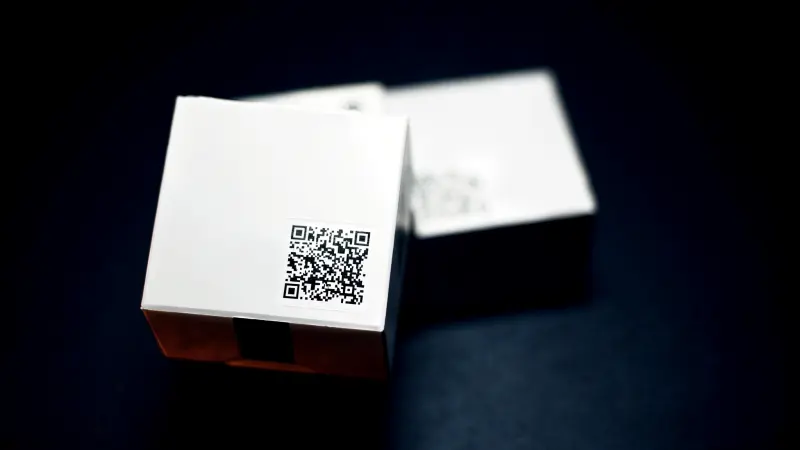
A band of light across the carton reveals the invisible fine pattern inside the print area Grafex Smart packaging An invisible signature is worked into the packaging; a copy cannot pass verification. Grafex sitesi

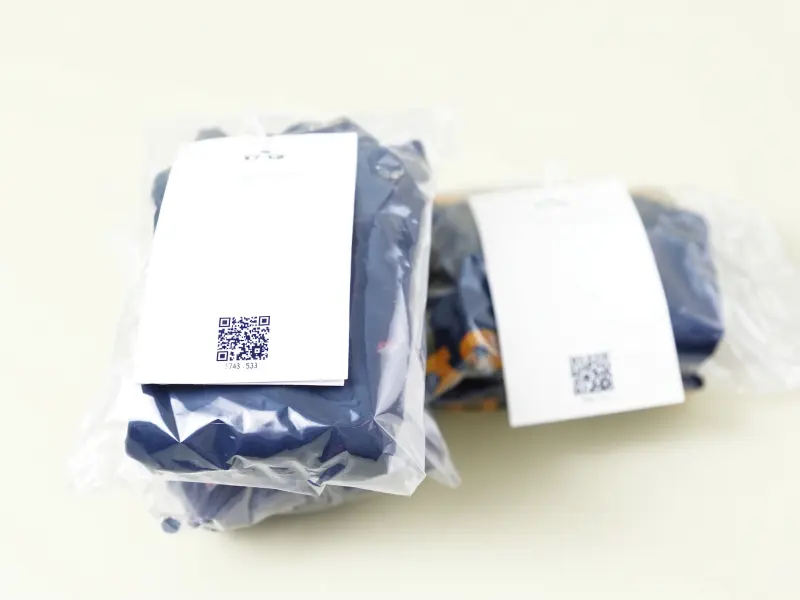
Grafex places a signature into the design of existing packaging elements such as the box, the dust bag, the tag card and the warranty document that is invisible and whose copy cannot pass verification. Printing happens on your existing line; the brand's carefully chosen packaging look and colour language do not change. A sales adviser or a customer can scan the packaging with the mobile app and confirm its authenticity.

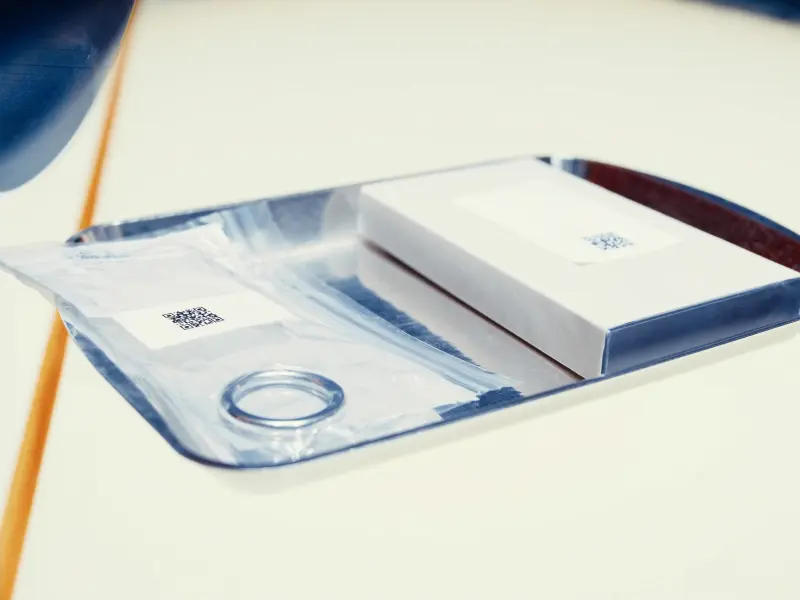
Three identical cartons in a row, each label carrying a different data matrix code Tagvex Secure labels A unique number for every product; every step from production to customer is recorded. Tagvex sitesi

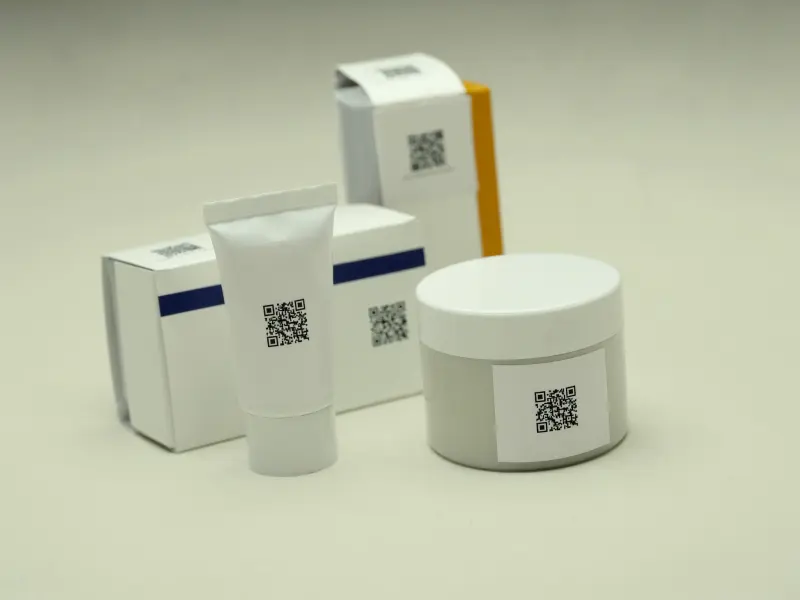
The Tagvex secure label gives every product or every batch a unique number and records its passage from the workshop, the warehouse, the distributor and the store. That makes it visible when a product allocated to a particular market is scanned in another channel. A duplicated code comes to light through scans at an unexpected point or repeated scans.

Flagged listings highlighted in a monitored grid Authex Digital monitoring Brand risks in digital channels are detected, prioritised and turned into action with evidence. Authex sitesi

Authex monitors unauthorised use of the brand on marketplaces, social media, digital advertising, domain names and app stores. Counterfeit listings, fake shops and advertising using brand images are documented with their date and content; takedown requests are filed and followed to conclusion, and whether removed content reappears is also monitored.

Example scenario

A product’s journey from production to verification.

  1. Label and packaging at the workshop

    As a leather bag leaves the workshop it is given a unique number with a Tagvex label; its box and warranty card are printed with the Grafex signature on your existing line.

  2. Warehouse and store delivery

    As the bag is sent from the central warehouse to a particular store, it is scanned with the mobile app at every delivery point and the movement is recorded.

  3. Verification at the point of sale

    The sales adviser scans the product with the mobile app in front of the customer; the customer can run the same verification on their own phone.

  4. A check in a second-hand sale

    Years later, someone buying the bag second hand scans the label and the warranty card to confirm its authenticity; meanwhile Authex monitors counterfeit listings of the same model and follows the takedown process.

Regulation

Regulations that bear on traceability.

The main rules that apply in your industry, or will soon take effect.

EU

Ecodesign Regulation (EU) 2024/1781, ban on destroying unsold products

From 19 July 2026 it is prohibited to destroy unsold consumer products such as the clothing and clothing accessories (including those made of leather) listed in Annex VII; the ban does not apply to micro and small enterprises and starts on 19 July 2030 for medium-sized ones. Keeping a record of which channel unsold stock was directed to therefore gains importance.

Official source
EU

Digital Product Passport (under the Ecodesign Regulation)

A digital record holding product, component and material information, linked to the physical product through a data carrier such as a QR code. Textiles are among the product groups expected to be brought into scope gradually in the 2027-2029 period; product-level identity and record infrastructure can support that preparation.

Official source
EU

General Product Safety Regulation (EU) 2023/988

Applying since 13 December 2024, the regulation requires products to carry identifiers such as a type, batch or serial number and supply chain information to be available on request for 6 years. Online marketplaces are also obliged not to publish listings that lack minimum safety and traceability information.

Official source
TR

Protection of intellectual and industrial rights at customs (Customs Law Art. 57)

Under Article 57 of the Customs Law and Articles 100-111 of the Customs Regulation, rights holders can apply electronically for goods infringing their rights to be detained at customs; an accepted application is valid for one year. Having information that identifies the genuine product ready makes assessing suspect goods at customs easier.

Official source

This section is for information only; rely on official sources for current obligations.

FAQ

Questions about luxury goods

Do we need to change our packaging design?

No. The Grafex signature is placed inside the existing design and printed on your existing line. The look of the box, the bag or the card does not change; the signature cannot be seen by eye.

Does the customer have to come to the store to verify?

No. Verification happens with the mobile app on a smartphone and needs no separate reader device. The customer, the sales adviser and a second-hand buyer can all use the same method.

Does it help find the source of grey channel sales?

Tagvex records which distributor and store a product was delivered to. When a product is scanned at a point outside its allocated market, that appears in the records and it becomes easier to examine at which change of hands the leak occurred.

How do we know that a returned product is genuine?

During a return, the product label is scanned with the mobile app and it is checked whether the number matches the record for that product. A code with no record, one that appears to belong to another store, or one scanned in different places before, calls for further examination.

What steps are taken against counterfeit listings on social media?

Authex monitors social media accounts, advertising, marketplace listings, domain names and app stores. Every detection is documented with its date and content, a takedown request is sent to the relevant platform and followed to conclusion; whether removed content reappears is also monitored.

Request a meeting

The right solution for your product follows from a needs analysis.

In the first meeting we review your product, sales channels and the risks you face, then recommend a verification method that fits.

Request a meeting