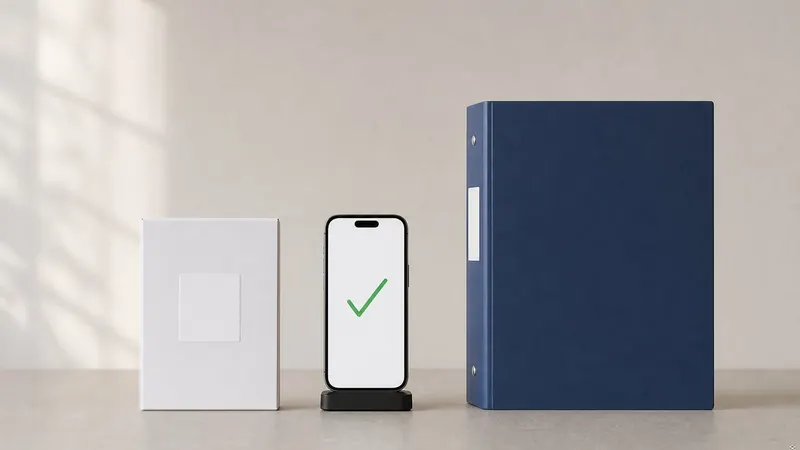

Anti-counterfeiting solutions are the methods that let a brand tell genuine products from copies, follow products through distribution and see the channels where fakes are sold. They fall into three layers: authentication on the packaging itself, traceability through a code given to each product or batch, and monitoring of online sales channels. Spectrace is a brand protection and product authentication company that protects products after they leave the factory: on-pack authentication (Grafex), serial-code traceability (Tagvex) and online brand monitoring (Authex). This article explains what each layer sees and how they work together.
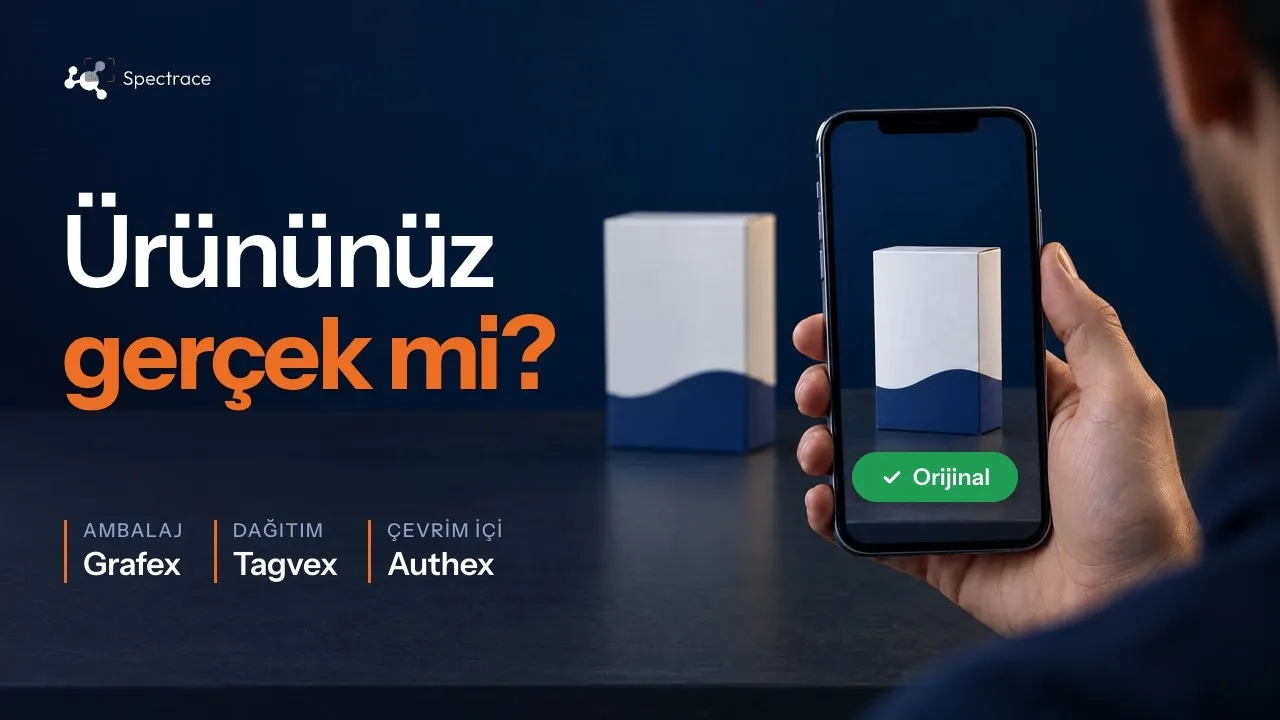
Video transcript
The video is narrated in Turkish. This is an English translation of the narration.
Same box. Same logo. Same shelf. But one of them is fake. And the difference cannot be seen with the eye. Which one? Spectrace gives every product a verifiable identity. In three layers. On the pack, Grafex. It embeds an invisible signature in the existing packaging design. The design and printing stay the same. When it is scanned with a phone, you can tell whether the product is genuine. In distribution, Tagvex. It gives each product its own copy-resistant code. Every scan, from the warehouse to the dealer, is recorded. If a code is scanned somewhere it was not planned for, channel diversion is spotted. Online, Authex. It scans marketplaces, social media, ads and domains. It reports listings that use your brand without permission, with evidence. Your team makes the decision. On the shelf. On the road. Online. Spectrace. A provable identity for every product.
How do you decide where to start?
- Name the problem. Is the pack being copied, is genuine packaging being refilled, are products drifting into unauthorised channels, or is the brand name being used online?
- Find where it shows up. A customer complaint, a field team, a dealer or a marketplace listing tells you where the problem is noticed.
- Decide who will verify. Only a specialist team, or dealers and consumers too? The second needs a method that works on a phone.
- Pick the first layer. Start with the layer that addresses the most frequent and most damaging problem.
- Bring the records together. Keep authentication results, code scans and online findings in the same record, so a finding in one layer becomes evidence for another.
What forms does counterfeiting take?
Counterfeiting is not one problem, and each form is seen by a different layer:
| Problem | What happens | Which layer sees it |
|---|---|---|
| Copied packaging | The pack and label are imitated | On-pack authentication |
| Refilling | Genuine packaging is reused with fake contents | Serial-code record and tamper evidence; only analysis sees the contents |
| Copied codes | A real code is printed on fake products | Serial-code record: repeated scans of the same code |
| Channel diversion | Genuine goods are sold in an unplanned region or shop | Serial code and distribution record |
| Fake listings and accounts | The product or brand is used online without consent | Online monitoring |
The second row shows an important limit. In refilling, the packaging is genuine, so a method that measures the pack's authenticity will, when it works correctly, return "genuine pack". We explain this in the article on refilled genuine packaging. In channel diversion the product is not fake and the legal assessment differs; see the article on grey markets.
What does on-pack authentication solve?
On-pack authentication reads, from the product itself, whether the pack in your hand is one the brand printed. Methods are grouped by how the check is done into overt, covert and forensic features; we cover the classification in the article on product authentication methods.
Grafex is a product authentication technology that adds an invisible digital signature to the packaging design and lets anyone verify a product's authenticity with a smartphone. Because the signature is embedded in the existing design, the look of the pack does not change and it is printed on the existing line. Company teams, dealers and end users verify products with a mobile app. Grafex's packaging security guide covers the layers of pack security.
Best suited to: products whose pack or label is copied closely and that need quick checks in the field and in consumers' hands.
What do serial codes and traceability solve?
A serial code gives each product, or each batch, its own identity. The GTIN barcode on the pack does not do this, because it identifies the product type and is the same on every pack of that type. The real value lies less in the code than in the record: when it was printed, which shipment took it where and where it was scanned.
Tagvex is a traceability system that gives each product, or each batch, its own copy-resistant code, tracks the distribution path and makes channel diversion visible. A copied code shows up in the record as a repeated scan or a scan from an unexpected location, and products can be checked with a smartphone. Tagvex's article on serial number verification explains how lookups work.
Best suited to: products with wide dealer and distributor networks, out-of-territory or parallel sales, or a need for batch information in recalls.
What does online monitoring solve?
A counterfeit often exists as a listing, a post or an ad before it reaches a buyer. Online monitoring sees that stage.
Authex is an online brand-monitoring platform that detects unauthorised use of a brand across marketplaces, social media, ads and domains, collects the evidence and reports it. For each finding it prepares the evidence file and a draft of the platform complaint; the brand's team or its lawyer decides whether to file it and files it. Authex's article on monitoring versus protection covers the difference.
Best suited to: products that sell heavily on marketplaces and social media and whose brand is used without consent in listings and ads.
How do the layers work together?
A single layer sees one side of the problem. Together, each completes the evidence of the others. A typical flow:
- Authex detects and documents a marketplace listing using the brand at a price far below market.
- The brand team makes a test purchase.
- The product that arrives is verified by phone with Grafex or Tagvex, and the result is added to the listing's evidence file.
- The brand's team or its lawyer reviews the file and the complaint draft, then files the platform complaint or chooses another route.
- Authex keeps monitoring; new accounts opened by the same seller are linked to the existing record.
In this flow, a seller's "it's genuine" objection can be answered with a result taken from the product itself. The legal framework for marketplace complaints in Türkiye is in the guide on what to do when your brand is infringed.
Which layer should I start with?
- If customers report receiving fakes: authentication on the product itself; we cover handling those reports in the article on customer counterfeit complaints.
- If products appear in the wrong region or with unauthorised sellers: serial codes and a distribution record.
- If the problem starts online: online monitoring.
- If you see all of the above: start with the most frequent problem and link the other layers to the same record.
We discuss which product to start with in where brand protection starts, and the stages of our assessment on the how we work page.
Frequently asked questions
Does any single solution stop counterfeiting completely?
No. Each layer sees one form of the problem: on-pack authentication sees copies, serial codes see repeated and misplaced scans, online monitoring sees listings. Protection gets stronger when the findings meet in one record.
Is a hologram enough on its own?
A hologram is an overt feature checked by eye. When a copy is good enough to fool the eye, the check weakens. That is why overt features are usually combined with a covert feature read by a tool, or with a code tied to a record.
Can the solutions be used separately?
Yes. Grafex, Tagvex and Authex can each be used on their own. Used together, the authentication result, the code scan and the online finding meet in the same file.
Does online monitoring take listings down?
Online monitoring detects and documents the listing and prepares the complaint draft. The brand's team or its lawyer files the complaint, and the platform decides on removal.