Assurance of genuine parts in electronics.

In devices, accessories and spare parts, counterfeits carry both a safety and a warranty risk.

Industry overview

Why trust matters in electronics.

Counterfeiting in electronics is not limited to finished devices such as phones and tablets; chargers, batteries, screens and electronic components are frequently copied too. In these products a counterfeit part can cause safety risks such as overheating, fire and electric shock, beyond any loss of performance. Not being able to tell a genuine product from a counterfeit in warranty and service processes raises costs for both the manufacturer and the authorised service, and weakens the trust built with the customer.

In this sector products change hands quickly between distributors, wholesalers, retail chains and online marketplaces, while spare parts circulate separately through the service network. As rules requiring records at product level, such as the battery passport and the digital product passport, come into force in the European Union, having a verifiable identity for every device and critical component is becoming an ordinary part of the supply chain. Every link without a record leaves a gap through which a counterfeit can enter the chain.

Figures

The scale of the counterfeiting risk.

€4.2 billion

Sales lost in the EU to counterfeit smartphones (2015, 8.3% of sector sales)

Source: EUIPO, The Economic Cost of IPR Infringement in the Smartphones Sector, 2017
12.9%

Impact of counterfeiting on smartphone sales worldwide (2015, €45.3 billion)

Source: EUIPO, The Economic Cost of IPR Infringement in the Smartphones Sector, 2017
66%

Share of post or express consignments in seizures of counterfeit information and communication technology devices

Source: EUIPO, 2020 Status Report on IPR Infringement (citing the OECD-EUIPO small parcels study), 2020

Risks

Risks faced in electronics.

Every industry has its own risk profile; solutions are configured around those risks.

Counterfeit batteries and chargers

Counterfeit batteries and chargers may lack the necessary protection circuits and carry a risk of overheating. When a user buys these believing them to be genuine accessories, the resulting harm reflects on the brand's reputation too.

Part substitution in the service network

Spare parts such as screens, batteries and boards can be replaced during repair with counterfeit or non-standard equivalents. When it is not known which channel a part came from, assessing warranty claims and establishing responsibility becomes difficult.

Copies presented as refurbished

Used or copied devices can be packaged as refurbished or new and sold through online channels. When the device identity and the packaging cannot be relied on, the buyer does not know what they are buying.

Small consignments and marketplace listings

In electronic devices and accessories, counterfeits often circulate through post and express consignments and marketplace listings. Because the listings use the brand's own product images, it becomes hard for the consumer to tell the difference.

Our approach

Brand protection at every layer.

Grafex, Tagvex and Authex can be used together or separately in any industry.

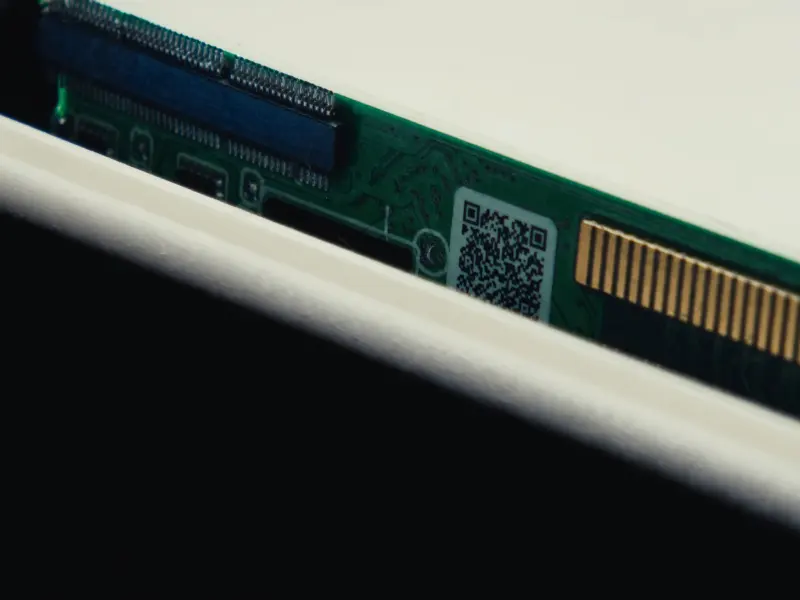
A band of light across the carton reveals the invisible fine pattern inside the print area Grafex Smart packaging An invisible signature is worked into the packaging; a copy cannot pass verification. Grafex sitesi

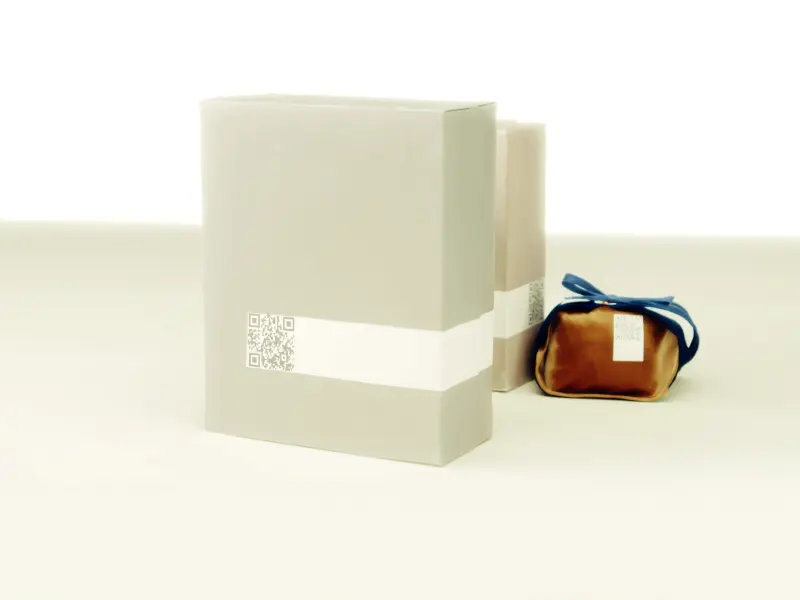
Grafex places a signature into the existing design of the device box, accessory packaging and warranty document that is invisible and whose copy cannot pass verification. Printing happens on your existing packaging line; the look of the box and the line layout do not change. A dealer, a customer or a service technician can scan the packaging with the mobile app and confirm its authenticity.

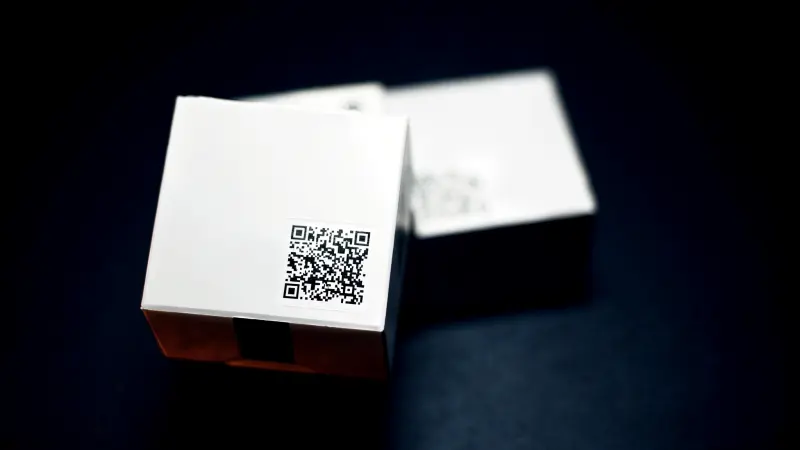
Three identical cartons in a row, each label carrying a different data matrix code Tagvex Secure labels A unique number for every product; every step from production to customer is recorded. Tagvex sitesi

By giving devices, accessories such as batteries and chargers, or spare part batches a unique number, Tagvex records every change of hands from line exit to the warehouse, the distributor, the store and the service bench. A service technician scans the part they are about to fit and checks its record. A duplicated code comes to light through scans at an unexpected point or repeated scans.

Flagged listings highlighted in a monitored grid Authex Digital monitoring Brand risks in digital channels are detected, prioritised and turned into action with evidence. Authex sitesi

Authex monitors unauthorised use of the brand on marketplaces, social media, digital advertising, domain names and app stores; apps imitating the brand and pages posing as authorised service are also in scope. Detections are documented with their date and content, takedown requests are filed and followed to conclusion; whether removed content reappears is also monitored.

Example scenario

A product’s journey from production to verification.

  1. Recording at line exit

    As a charger leaves the production line it is given a unique number with Tagvex; its box is printed with the Grafex signature on your existing packaging line.

  2. Delivery to distributor and store

    As the product is delivered to the distributor and then to the retail store, it is scanned with the mobile app and every movement is recorded.

  3. The customer verifies the box

    Before buying, the customer scans the box with the mobile app on their own phone and checks that the product is genuine.

  4. Part check at service

    When a device comes in for repair, the technician scans the label of the spare part to be fitted; a part with no record, or one scanned somewhere else before, is examined further.

Regulation

Regulations that bear on traceability.

The main rules that apply in your industry, or will soon take effect.

EU

Battery Regulation (EU) 2023/1542, battery passport

From 18 February 2027 all batteries will be marked with a QR code; for light means of transport batteries, industrial batteries above 2 kWh and electric vehicle batteries, that code will give access to an electronic record containing information specific to the battery model and to the individual battery, that is, the battery passport. Individual product identity and record infrastructure can support this preparation.

Official source
EU

General Product Safety Regulation (EU) 2023/988

Applying since 13 December 2024, the regulation requires products to carry identifiers such as a type, batch or serial number and supply chain information to be available on request for 6 years. Online marketplaces are also obliged not to publish listings that lack minimum safety and traceability information.

Official source
TR

BTK Central Device Registration System (IMEI registration)

Devices with an IMEI number brought in from abroad are blocked from the network if they are not registered within 120 days; devices whose IMEI has been altered (cloned) are also blocked. The system is a local example of how a copied device identity can be detected through records.

Official source
TR

Product Safety and Technical Regulations Law No. 7223

In force since 12 March 2021, the law requires actors in the supply chain to keep a record of whom they bought a product from and whom they sold it to, covers product safety oversight in e-commerce as well, and makes the recall of unsafe products compulsory. Records of changes of hands at product level can support preparation for these obligations.

Official source

This section is for information only; rely on official sources for current obligations.

FAQ

Questions about electronics

Do service technicians need a special device?

No. Verification happens with the mobile app on a smartphone. Authorised service, dealers and customers can all use the same method; no separate reader device is needed.

Are a serial number and IMEI enough on their own?

A serial number and IMEI identify the device, but they can be copied and they do not cover the packaging and accessories. Tagvex adds every change of hands in the supply chain to the record, while Grafex makes the packaging itself verifiable. These layers can be used alongside your existing numbers.

Does it satisfy the battery passport obligation?

Spectrace solutions do not replace the battery passport and do not on their own provide compliance with a regulation. Identity and change-of-hands records kept at product and batch level can, however, support preparation for obligations of this kind that require information at product level.

Should numbering be at unit level or batch level?

For high-value devices, unit-level numbering lets every device be tracked individually. For high-volume products such as cables, small accessories or spare parts, batch level may be preferred; the choice is made according to the product's value and risk level.

Are counterfeit apps and fake service pages monitored?

Yes. Authex monitors app stores, domain names, social media, digital advertising and marketplaces. Apps imitating the brand and pages posing as authorised service are documented with their date and content, and takedown requests are followed to conclusion; whether removed content reappears is also monitored.

Request a meeting

The right solution for your product follows from a needs analysis.

In the first meeting we review your product, sales channels and the risks you face, then recommend a verification method that fits.

Request a meeting