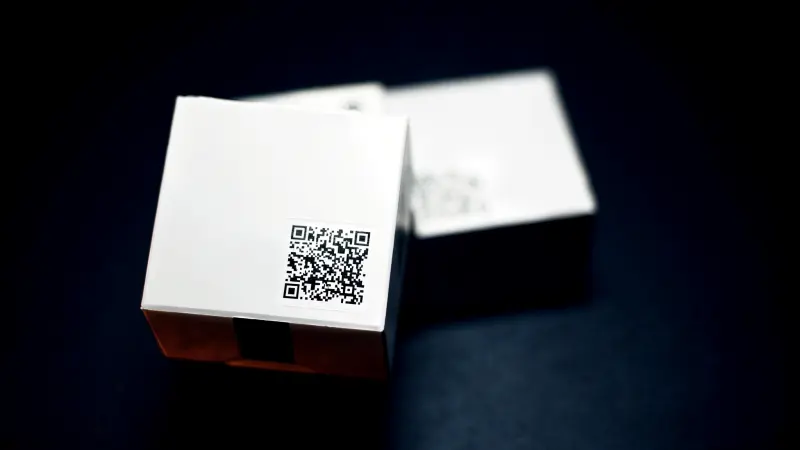
The first feeling when traceability is in place is relief: where every batch came from and where it went is now written down. That is a real gain — recalls narrow, inspections get easier, and the boundary of responsibility becomes clear.
But a record does not prove one thing: that the physical product in your hand is the product that record describes. The record is tied to the label, and a label can be copied, stuck on the wrong product, or left on a roll nobody accounted for.
A genuine label stuck on a counterfeit product looks "correct" even in a flawless chain of records.
The difference between the two questions
Tracking answers "where did this product come from". Verification answers "is this really that product". The two work with different data and neither replaces the other.
- Tracking reads from the record: which batch, which date, which location.
- Verification reads from the product: a signature embedded in the packaging design whose copy cannot pass verification.
- When the two match, the answer is settled; when they diverge, the problem becomes visible.
Where the layer fits
Verification is not a check added at the end of the chain; it works at every point of reading. The person holding the product in the field — an employee, a dealer or a customer — looks at the product with their smartphone before looking at the record. The answer comes immediately: valid, suspect or invalid. The decision stays with the reader, but it no longer rests on an impression.
That is why our service is named after all three jobs together: tracking, monitoring and verification. Without the third, the first two were incomplete.
Neither replaces the other
Tracking answers "where is this product". Verification answers "is the product in my hand really that one". Without the second, the first cannot stop a counterfeit product from appearing to have a genuine journey.
So the two layers do not substitute for each other. Even in a facility with a complete tracking chain, a product that enters the chain from outside can only be told apart through verification.
Who verification serves
The audience for verification is usually assumed to be the consumer. In practice the main users are the people inside the chain: whoever buys, whoever accepts a shipment, whoever investigates a complaint. Consumer verification builds trust; verification inside the chain prevents loss.
Tracking describes the product's path; verification says that the path really belongs to this product.